Why Does Volunteering in Nepal Feel So Different?
Why Does Volunteering in Nepal Feel So Different?
I still remember my first morning in Bhaktapur. The sun hadn’t quite cleared the mountains yet, and I was stumbling around my host family’s kitchen, trying to figure out how to help with breakfast without breaking anything. My host mother, Didi, just laughed and handed me a cup of chiya—sweet milk tea that I’d come to crave every single morning.
That’s the thing about volunteering abroad in Nepal that nobody tells you in the brochures. Yes, you’ll probably end up teaching kids their ABCs or helping women’s cooperatives market their handicrafts. But the real magic? It happens over breakfast. During evening walks when neighbors wave you over for dal bhat. In those quiet moments when you realize you’ve stopped being a visitor and started being part of something bigger.
So What Actually Makes Nepal Different?
Look, I’ve talked to plenty of people who’ve done volunteer work in other countries. And honestly? Nepal hits different. Maybe it’s because the whole country is roughly the size of Arkansas, which means you’re never too far from someone who knows someone in the village where you’re working. Or maybe it’s that “Atithi Devo Bhava” thing—this cultural idea that guests are literally divine—which sounds cheesy until you experience it and realize people actually mean it.
The challenges here are real, not manufactured for volunteer programs. Schools in rural areas genuinely need English teachers. The 2015 earthquake recovery is still ongoing in some communities. Women’s groups are actually building businesses, not just keeping volunteers busy. When you volunteer in Nepal, you’re plugging into authentic needs that communities have identified themselves.
What Nepal Volunteer Programs Actually Look Like
Teaching (And Learning) in Village Schools
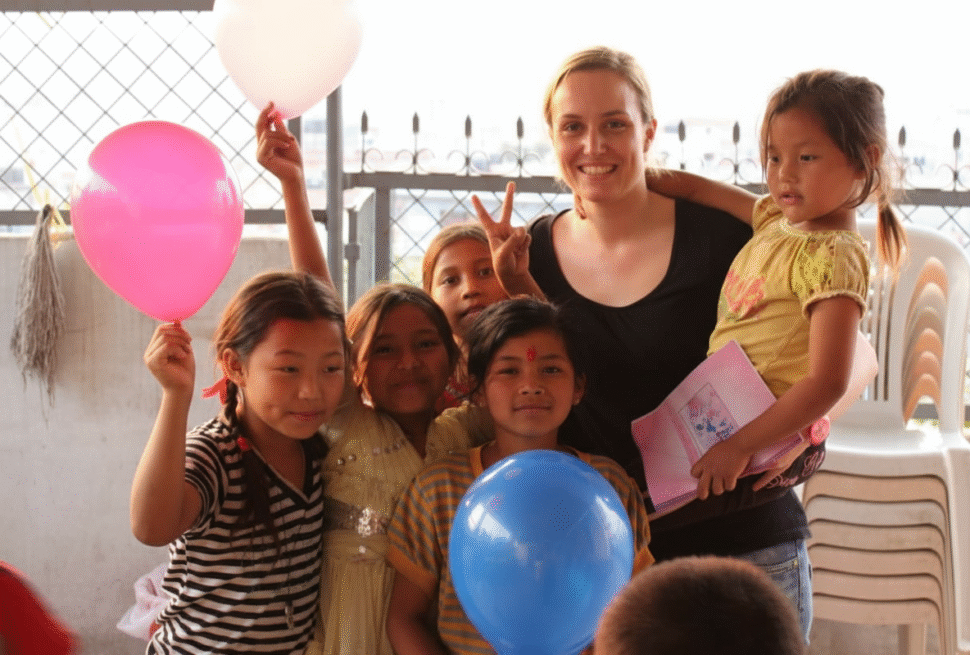
Most education-focused programs place you in government schools, usually within a few hours of Kathmandu or Pokhara. Some are further out if you’re up for a real adventure. You might have 30 kids in a classroom, or you might have 8. Either way, they’re going to teach you at least as much as you teach them.
The curriculum part is pretty straightforward—English conversation, maybe some computer basics, definitely games and activities that make learning fun. But here’s what they don’t put in the job description: you’ll learn 47 different ways to play hand-clapping games, you’ll become an expert at charades, and you’ll discover that explaining why English has silent letters is actually impossible.
The cultural exchange in Nepal happens naturally. Kids want to know everything about where you’re from (they’re particularly fascinated by snow, cars, and whether you’ve met any celebrities). You’ll find yourself equally curious about their lives, their families, their festivals. Before long, you’re swapping language lessons—you teach them English idioms; they teach you Nepali phrases that would probably get you in trouble if you used them at the wrong time.
Women’s Cooperatives and Real Skills Development
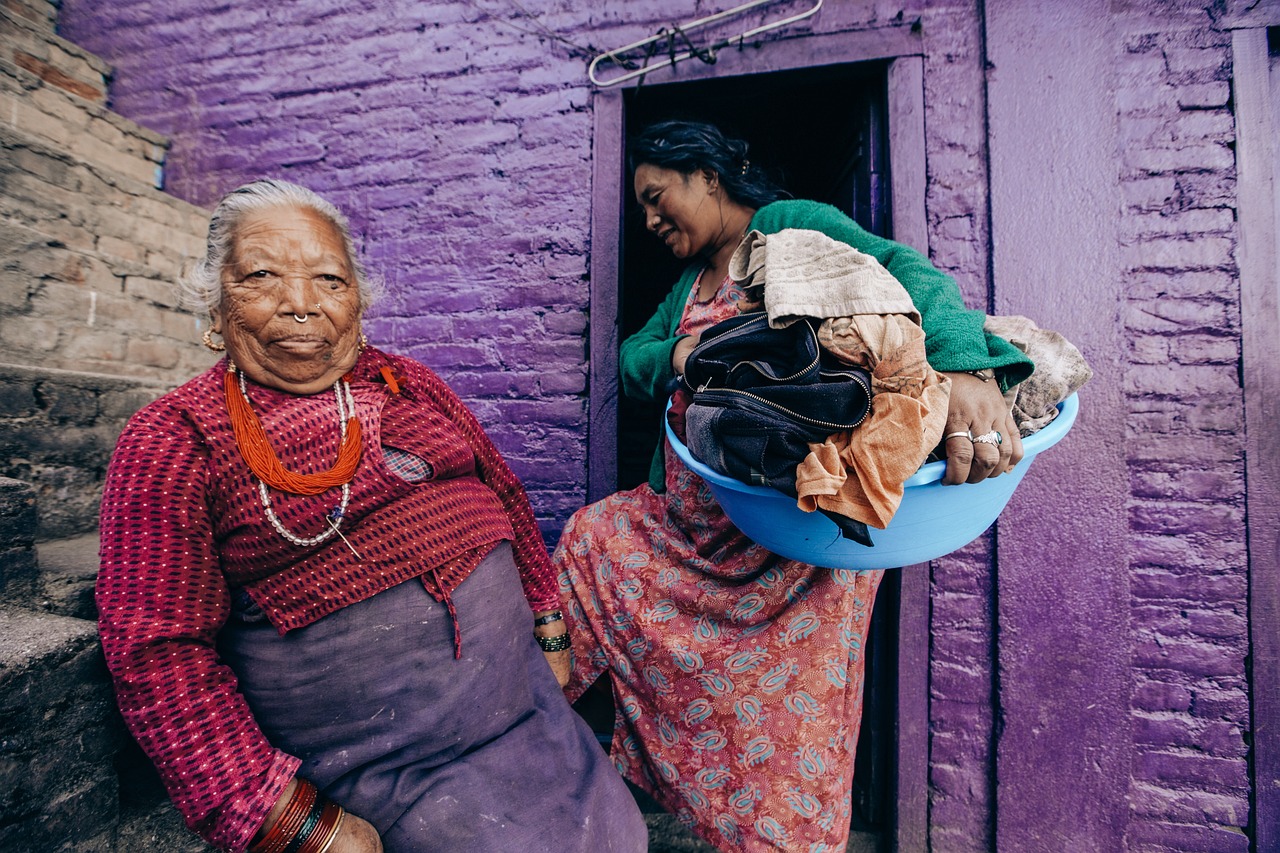
A lot of Nepal volunteer programs work with women’s groups, and this is where you see some seriously impressive stuff happening. These aren’t feel-good craft circles—they’re actual businesses. Women making everything from pashmina scarves to traditional Dhaka fabric products, managing finances, negotiating with buyers.
Volunteers usually come in to help with specific skills: maybe you know about social media marketing, or accounting, or you can help improve product photography. Maybe you’re teaching English for business. The point is supporting what they’re already doing, not telling them how to do it differently. These women are savvy entrepreneurs—they just need specific tools or connections that volunteers can help provide.
Conservation Work That Actually Matters
The environmental projects are probably the most physically demanding, but also some of the most satisfying. We’re talking tree planting in deforested areas, helping communities develop waste management systems, working on sustainable agriculture initiatives. Some programs combine this with trekking, so you’re basically getting paid in mountain views while doing conservation work.
The trash situation in popular trekking areas is genuinely problematic, and locals know it. They want solutions. So when volunteers show up ready to help organize clean-ups or develop systems that actually work for remote communities, it’s appreciated. Just don’t expect to single-handedly solve problems that have complex economic and logistical roots.
Living Like a Local (Sort Of)
Here’s the reality check: homestays in Nepal are comfortable but basic. You’ll probably have your own room, but it might be cold in winter. The toilet situation varies—squat toilets are common, hot water might mean a bucket, and electricity can be temperamental. None of this is actually bad once you adjust; it’s just different from what most volunteers are used to.
The food is fantastic, though. Dal bhat—rice, lentil soup, vegetable curry, and usually some pickled vegetables—gets served twice a day in most homestays. You’ll hear the phrase “dal bhat power, 24 hour” constantly, and honestly, they’re not wrong. It’s filling, nutritious, and after a few weeks, you’ll crave it when you get home.
Your host family will probably adopt you. Like, actually adopt you as a temporary family member. You’ll get a Nepali name, they’ll include you in everything, and they’ll worry about you like you’re their actual child. It’s simultaneously overwhelming and incredibly touching.
The Nepal vs. India Question Everyone Asks
People always want to know: should I volunteer in Nepal or India? Having spent time in both countries, here’s my honest take.
India is massive and intense. The volunteer opportunities are more diverse—you can find programs in tech education, advanced healthcare, environmental science, you name it. Cities are bigger, the cultural variations across regions are dramatic, and the whole experience can be wonderfully overwhelming. If you want variety and scope in your volunteer work, India delivers.
Nepal is intimate. You’ll get to know people deeply in a way that’s harder in India’s larger cities. The mountain communities have their own distinct culture that feels different from anywhere else in South Asia. Programs tend to focus more on education, women’s empowerment, and conservation rather than specialized fields. The Buddhist-Hindu mix creates a spiritual atmosphere that’s really specific to this place.
Logistically, Nepal is easier. The country’s small size means less complicated travel. The volunteer infrastructure is well-developed thanks to decades of trekking tourism. You can see mountains, jungles, and medieval cities within a few hours’ drive from each other.
Both countries need culturally sensitive volunteers who show up ready to learn. India’s community programs and responsible travel Nepal initiatives both require the same humility and openness. But if you specifically want to experience Himalayan village life and work with tight-knit communities where everybody knows your name by week two, Nepal’s your place. Many volunteers end up experiencing both countries’ programs over time, which honestly makes sense—they complement each other well.
How to Not Screw This Up
Real talk: not all volunteer programs are created equal. Some are basically poverty tourism with a volunteer label slapped on. Here’s what to look for in responsible travel Nepal programs:
The organization should work directly with local partners, not just parachute in with ideas. Local staff should be paid fairly. The program fees should be transparent—you should know where your money goes. Most importantly, the projects should address actual community needs, not needs invented to keep volunteers occupied.
Go in humble. You’re not there to save anyone or fix anything single-handedly. You’re there to support work that’s already happening and to build relationships. Listen more than you talk, especially at first. Ask questions. Recognize that Nepali people have been solving problems long before you arrived and will continue after you leave.
Learn some basic Nepali phrases before you go. Doesn’t have to be fluent, but knowing how to greet people, say thank you, and ask basic questions shows respect. Plus, people’s faces light up when you try.
What Nobody Mentions in the Brochures
You’re going to have hard days. Days when the language barrier feels impossible, when you’re homesick, when you wonder if you’re actually helping or just taking up space. This is normal. Push through it.
You’re also going to have moments of pure joy that you didn’t see coming. A student finally nailing a concept they’ve struggled with. Your host grandmother teaching you to make momos (dumplings) and laughing at your terrible folding technique. Evening walks when the mountains turn pink and gold, and you realize you’re exactly where you’re supposed to be.
The relationships you build stick with you. I still WhatsApp with my host family. I’ve watched my students graduate, start jobs, get married. These connections outlast your volunteer placement by years.
Ready to Actually Do This?
Volunteering abroad in Nepal isn’t a vacation. It’s messier and more challenging than that. It’s also more rewarding than any vacation could ever be. You’ll work hard, adapt constantly, and probably question your life choices at least once when you’re squatting over a pit toilet during a power cut.
But you’ll also become part of communities that will welcome you back like family. You’ll contribute to real projects that matter to real people. You’ll eat incredible food, see stunning landscapes, and have experiences that reshape how you see the world.
The mountains are waiting. The communities are ready. The dal bhat is hot. What are you waiting for?
Browse our Nepal volunteer programs and figure out which one fits what you want to contribute and learn. This isn’t about checking a box or padding a resume—it’s about showing up for something bigger than yourself. And yeah, that’s exactly as cliche and as true as it sounds.